The best camera for macro photography will allow you to get truly up close and personal with the tiniest of tiny subjects, including insects, plants and more. We've focused on a range of cameras to make our picks for this list, including not just cameras that shoot great images, but ones that have dedicated macro modes and functions to make close-up shooting easier.
Of course, a huge part of a macro setup is the lens, so we've also made sure to include cameras that have excellent ranges of macro photography lenses, including affordable options. We’ve looked at beginner and budget-friendly options as well as more sophisticated cameras for expert photographers, and have weighed up value for money when making our picks. As such, there’s a mix of older and newer cameras in this guide. But you can rest assured that they all have one thing in common: they can all capture spectacular macro images.
Best mirrorless for macro

|
Sensor: 24.5MP full-frame BSI partially stacked CMOS Video: 4K and 6K RAW Autofocus: Hybrid phase-detection/contrast AF with AF assist and subject tracking Stabilisation: In-body 5-axis (8 stops) Burst Rate: Up to 120 fps |
Pros:
Cons:
|
If you’re going to shoot macro, the Nikon Z series is an excellent place to start. You have access to some absolutely sublime macro lenses, particularly the Nikon Z MC 105mm f2.8 VR S, which delivers absolutely faultless image quality even for extreme close-up work. As for the camera itself, our recommendation is the Nikon Z6 III, a spectacular all-rounder that produces images of stunning quality, in all conditions.
The body of the camera is durably built for working outside, with weatherproofing. There’s also a beautifully large and sharp viewfinder to use for composition, and the Z6 III has been upgraded from the previous version with a fully articulating screen, which is particularly useful for macro photography, as you may find yourself often placing your camera in positions where using the viewfinder isn't particularly practical.
A stunningly accomplished camera with a dazzlingly sharp lens selection to match, the Nikon Z6 III is a top choice for anyone looking to get serious about their macro photography.
Best APS-C camera for macro

|
Sensor: 40.2MP APS-C X-Trans CMOS 5 HR Video: 6.2K at 30p, 4:2:2 10-bit Autofocus: Deep-learning subject detection AF Stabilisation: 5-axis IBIS up to 7 stops Screen: 3-way tilting LCD |
Pros:
Cons:
|
Fujifilm’s X-T5 is a stills-first camera, a magnificent APS-C shooter for enthusiasts, and one that produces punchy, dynamic images. It’s perfect for macro photography – in part because of its weatherproof build and tactile manual controls, but also because of the superb X-mount lens selection. Macro shooters have their pick of some incredible lenses in this system – the star of the show is the Fujifilm XF 80mm f2.8 LM OIS WR Macro, a stunning telephoto with incredible close-up capabilities and beautiful bokeh. However, there’s also the more budget-friendly XF 60mm f2.4 R Macro and XF 30mm f2.8 R LM WR Macro to choose from.
Fujifilm cameras have a reputation for spectacular JPEG quality that can soften the hearts of even the most die-hard RAW enthusiast. With 40MP of resolution to play with, the X-T5 is terrific for making big prints of your macro images.
|
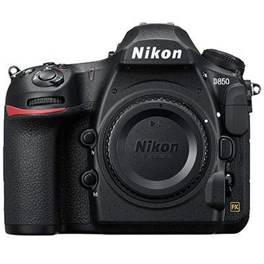
Sensor: 45.7MP full-frame BSI CMOS Video: 4K UHD at 30p (full sensor width) Autofocus: 153-point phase-detection AF Viewfinder: Optical with 0.75x magnification Burst Rate: Up to 7 fps (9 fps with grip) |
Pros:
Cons:
|
The spectacular Nikon D850 is a much-loved DSLR, particularly among wildlife photographers, and it has many features that make it a superb option for macro work. Its 45.7MP back-illuminated, full-frame CMOS sensor produces spectacular, dynamic images that print brilliantly, and its weatherproof body is built like a tank – perfect for a day’s outdoor shooting. The battery life is also excellent, rated to 1,840 images per charge, and the shutter is rated to at least 200,000 actuations. The D850 is a robust camera that simply shoots and shoots, and you’ll get many years’ happy macro photography out of it.
Lens-wise, the Nikon F-mount is generously stocked with macro options. Remember that you can often save some cash by looking beyond your camera manufacturer to third-party lens makers – the Sigma 105mm f2.8 Macro EX DG OS HSM is an excellent lens for close-ups that’s also highly affordable.
Best mid-range camera for macro photography
|
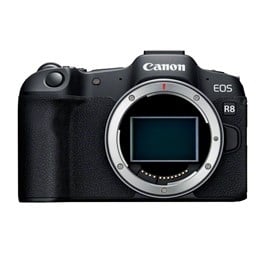
Sensor: 24.2MP full-frame CMOS Video: 4K 60p oversampled from 6K Autofocus: Dual Pixel CMOS AF II with subject tracking Stabilisation: Digital IS (no IBIS) Weight: Approx. 461g (incl. battery and card) |
Pros:
Cons:
|
The huge Canon lens ranges in the EF and RF mounts, consisting both of Canon-made macro optics and high-quality lenses from third-party manufacturers like Sigma, mean that a Canon camera is a highly competitive option for macro photography. The full-frame EOS R8 sits firmly in the middle of the range, and gives you fantastic lenses to choose from like the RF 100mm f2.8 L Macro IS USM, which boasts its own Spherical Aberration control ring that allows you to fine-tune the shape and texture of bokeh in your images.
Alternatively, pick up an EF-EOS R mount adapter and you’ve got a world of budget-friendly DSLR macro lenses to explore, such as the Sigma 105mm f2.8 Macro EX DG OS HSM for Canon EF, which when adapted to the EOS R8, will work with full functionality of autofocus. The camera itself produces vivid, punchy images from its 24.2MP sensor, and is also ruggedly built, with weather-resistant frame that means it can keep on shooting in tough conditions.
Best beginner camera for macro photography

|
Sensor: 20.4MP Four Thirds Live MOS Video: 4K at 30p Autofocus: Hybrid AF with 121 contrast-detect points and 121 phase-detect points Stabilisation: 5-axis sensor-shift Screen: Vari-angle touchscreen |
Pros:
Cons:
|
Micro Four Thirds is a great system to consider if you’re looking to build a macro photography setup without spending too much, and the new OM System PEN is an ideal starting point. A beginner-friendly mirrorless camera that benefits from the latest features, the PEN is a stylish option that captures crisp, punchy, dynamic images, and benefits from a weatherproofed body that's IPX1-rated.
The slim, stylish PEN also benefits from OM System's clever computational photography features, many of which have their uses in macro photography. These include in-camera Focus Bracketing and Focus Stacking modes, allowing you to extend depth of field by combining together several images with different focal planes. Also potentially handy is the High Res Shot mode, capable of producing a 50MP images hand-held or on a tripod.
Lens-wise, you have lots to pick from. Affordable lenses like the M.Zuiko Digital ED 60mm f2.8 Macro are a good starting point. Remember that the smaller sensor means a 2x crop factor, so the effective focal length of the lens is double the stated focal length. For a more premium option, there’s also the spectacular OM SYSTEM M.Zuiko Digital ED 90mm f3.5 Macro IS PRO. And remember that you can use Panasonic Micro Four Thirds lenses interchangeably on this camera, so optics like the Panasonic 45mm f2.8 Macro Leica D Vario-Elmar are also in play.
|
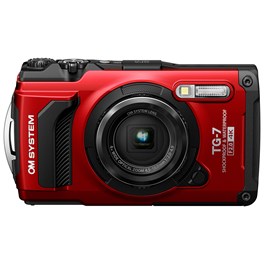
Sensor: 12MP 1/2.3-inch BSI CMOS Lens: 25-100mm f2.0–4.9 equivalent Video: 4K UHD at 30p Durability: Waterproof to 15m, shockproof to 2.1m Extras: GPS, compass, thermometer, manometer |
Pros:
Cons:
|
We would normally think twice about recommending a compact camera for macro photography, as generally it’s best if you have the flexibility to attach a dedicated macro lens. However, the OM System Tough TG-7 makes for a great budget option for macro shooters for a number of reasons – not just the price. For one, it’s a tough compact, meaning it’s waterproof, shockproof, freezeproof and crushproof. If you’re looking for an adventure-ready camera, you can hardly ask for better.
For two, the TG-7 boasts a number of dedicated macro modes designed to facilitate close-up shooting. As well as the standard Microscope mode, there’s also the option to try your hand at Focus Stacking, and even macro modes that are specifically designed to work underwater. That’s something no other camera on this list can offer — at least, not without an expensive housing. This makes the OM System Tough TG-7 a unique proposition among macro cameras, and one that’s well worth snapping up.





How to choose a camera for macro photography
There are a few essential features to consider when choosing a camera for macro work – whether you’re shooting insects, flowers or fine product details.
Sensor size – While macro photography is more about close focusing than megapixels, sensor size still plays a crucial role. Larger sensors (like APS-C or full-frame) generally offer better image quality, low-light performance and depth-of-field control. However, smaller sensors (like Micro Four Thirds) give you more apparent magnification and deeper depth of field, which can be useful when working close to your subject.
Lens compatibility – A macro lens is essential for true close-up work. Make sure your chosen camera system has dedicated macro lenses available, ideally offering 1:1 magnification (life-size reproduction). Interchangeable-lens cameras offer the greatest flexibility, but there are fixed-lens compact cameras with built-in macro modes which can still be effective for beginners.
Autofocus and manual control – Precision is everything in macro photography. Look for a camera with accurate and responsive autofocus, ideally with focus peaking for manual adjustments. Focus bracketing – where the camera takes a series of images with slightly different focus points – is also a valuable feature for creating stacked, sharp images from front to back.
Stabilisation – Whether in the body (IBIS) or lens (optical), image stabilisation can make a big difference, especially when shooting handheld or in natural light. Macro work often involves tiny movements that can throw off focus or introduce blur, so this is a real benefit.
Durability and handling – Shooting macro often involves getting low to the ground or into awkward spaces. A camera with a vari-angle or tilting screen can make composition easier, and weather-sealing can be a bonus if you're working outdoors. Comfort and ease of use matter too – the more natural the camera feels in your hands, the more you can focus on the shot.
FAQs
What is Macro Photography?
Macro photography is a specialised form of close-up photography that captures small subjects at a 1:1 ratio or larger, revealing intricate details not visible to the naked eye. It often involves shooting small objects like insects, flowers, or textures.
What equipment is important for Macro Photography?
Essential equipment includes a macro lens for close focusing, a sturdy tripod to reduce camera shake, and good lighting, such as a ring flash or diffused natural light. Extension tubes and lens filters can also enhance macro capabilities.
What is the ideal lighting setup for Macro Photography?
The ideal lighting setup often involves diffused natural light or external sources like ring flashes or LED lights. Diffusers and reflectors can help control harsh shadows and highlights, providing even illumination.
How should you manage shallow depth of field in Macro Photography?
Managing a shallow depth of field involves careful selection of the focus point and adjusting the aperture. Focus stacking, a technique combining multiple images with different focus points, is also effective in achieving a greater depth of field.
What are the best subjects for Macro Photography?
The best macro subjects include insects, flowers, water droplets, textures, and small objects with intricate details. Experiment with various subjects to discover unique perspectives and details that may not be immediately apparent.
How can I get started with Macro Photography on a budget?
Start with affordable options like extension tubes or close-up filters to convert a standard lens into a makeshift macro lens. Utilise natural light and DIY diffusers. As you progress, consider investing in a dedicated macro lens and additional accessories.
How do we decide?
Our in-house photography specialists, store staff, and industry partners work together to review our buying guides and advice articles. We also monitor emerging trends and listen closely to customer feedback, ensuring our recommendations stay current and relevant to what photographers and filmmakers are actually looking for.
By carefully curating the products we recommend, our guides are designed to offer clear, trustworthy advice that helps customers choose the right kit with confidence.
If you would like further advice, our contact centre team are here to help. You can also reach us via email or social media. And remember, if you purchase based on our recommendations, your order is covered by our full returns policy.

Sign up for our newsletter today!
- Subscribe for exclusive discounts and special offers
- Receive our monthly content roundups
- Get the latest news and know-how from our experts