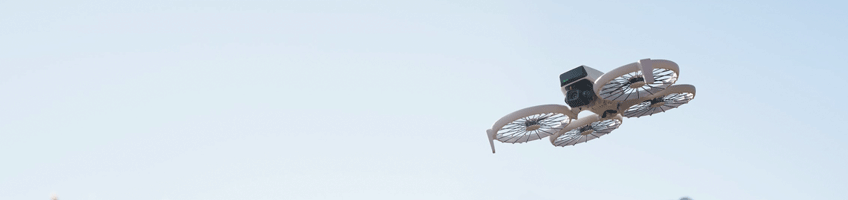
Drones are more popular than ever, particularly for photography and videography. We love seeing the kinds of creative imagery that the photo community is creating with the best drones, and these days, it’s rare that a new TV show drops without a drone shot or two in it. With drones being affordable, easy to operate and fun to fly, there’s never been a better time to dive into the world of aerial image-making - as long as you make sure you follow the rules.
The Civil Aviation Authority (CAA) regulations have been updated for 2026, and it’s important to stay up to date. Failing to adhere to regulations when flying a drone can lead to severe legal consequences and potentially endanger the welfare of others. So, we’ve put together this quick primer on the Drone Code and what you need to know.
We’ve partnered with Eagle Eye Innovations, accredited specialists in drone pilot training, to help you stay safe in the air. Read on for everything you need to know about flying drones safely and legally.
The Drone Code: What IDs do I need?
There are two types of ID you may need to fly a drone in the UK: a Flyer ID and an Operator ID.
An Operator ID designates you as the person responsible for the drone, while a Flyer ID shows that you have passed the CAA’s official theory test and understand the rules for safe drone operation.
Most camera-equipped drones sold in the UK will require at least an Operator ID, though the exact requirements depend on the weight of your drone and whether it has a camera fitted.
|
Type of drone or model aircraft |
ID needed |
|
|
|
Flyer ID | Operator ID |
|
Less than 100g |
Optional but strongly recommended |
Not required unless fitted with a camera |
|
100g to less than 250g, including UK0 |
Required |
Required if fitted with a camera |
|
250g to less than 25kg |
Required |
Required |
|
UK1, UK2, UK3 or UK4 class drone |
Required |
Required |
You can register for a Flyer ID and Operator ID through the UK Civil Aviation Authority. Our drone pre-flight checklist provides more detail on these, including how to register.
Check your drone’s take-off weight
Some drones are marketed as sub-100g or sub-250g, but accessories such as propeller guards, landing gear or ND filters can increase the total take-off weight.
It is your responsibility as the pilot to ensure your drone still falls within the correct category before flying.
UK drone class marks
From 1 January 2026, all newly sold drones in the UK must carry a UK class mark. These markings indicate the safety standards the drone meets and the operational rules that apply to it.
The UK class system ranges from UK0 to UK6:
- UK0: Lightweight drones under 250g
- UK1 to UK3: Drones designed for standard Open Category flying, with increasing safety features depending on class
- UK4: Typically used for model aircraft and specialist operations
- UK5 and UK6: Higher-risk drones intended for advanced or specialised operations. Learn more here.
Your drone’s class mark helps determine where and how you can legally fly it.
Open Category flight rules
Drone operations in the Open Category are divided into three groups based on how close you fly to people and built-up areas.
Open A1 (Fly over people): Low-risk flying with lightweight drones. You can fly near people, but never over crowds.
Open A2 (Fly close to people): Flying closer to uninvolved people with additional operational restrictions and training requirements.
Open A3 (Fly far from people): Lower-risk flying that takes place well away from people, residential areas and built-up environments.
The category your drone falls into depends on its weight, class marking and intended operation.
For most users, flying within A1 or A3 with a Flyer ID and Operator ID will be sufficient.
Additional qualifications and advanced flying
Some higher-risk drone operations require additional training and certification beyond a standard Flyer ID. For example, if you want to fly closer to uninvolved people, you may require an A2 Certificate of Competency (A2 CofC).
For more advanced operations, such as flying in higher-risk environments, pilots may need to complete a Remote Pilot Certificate (RPC-L1) course through an accredited Recognised Assessment Entity (RAE(PC)).
The RPC-L1 qualification has now replaced the previous General Visual Line of Sight Certificate (GVC) for standard visual line of sight commercial operations in the UK.
Most users and content creators flying within the Open Category will not require these additional qualifications.
The Drone Code: Flying safely
Flying your drone safely is your responsibility, and it’s essential to be familiar with the rules and regulations surrounding drone flight before you take to the air.
Always keep your drone in sight
You must maintain a direct visual line of sight with your drone at all times. That means seeing it with your own eyes, not through a screen or monitor. Glasses are fine, but binoculars or other visual aids are not.
The exception is certain automated modes, such as follow-me, but even then, you’re still responsible for safe operation at all times.
For FPV flying, you need an observer
An observer is a second person who keeps visual contact with the drone while you fly using goggles or a live feed.
They should be within speaking distance and understand the basic rules. While they don’t need a Flyer ID, they must be capable of spotting hazards and communicating clearly.
If you’re flying FPV, having an observer is mandatory.
Fly below 120m (400ft)
The legal maximum height for drone flying is 120m (400ft). This helps keep drones clear of other aircraft, though you should always be mindful of helicopters, microlights or other drones that may be flying lower.
This height is measured from the surface directly below your drone, so if the terrain changes, your altitude should adjust with it.
Keep a safe distance from people
You must not fly over crowds under any circumstances.
For most drones, you should maintain a horizontal distance of 50m from people. This can vary depending on your drone’s class and operating category, but the principle is simple: if you’re close enough to cause harm, you’re too close.
There are three main exceptions to the 50m rule:
Exception #1: Your drone weighs less than 250g
Sub-250g drones can be flown closer to people, though you still should not fly directly over them and should take every precaution not to endanger them.
Exception #2: The people are involved in the flight
You can fly near anyone who is directly involved in your flight; observers, assistants, friends or family members helping with the operation.
Exception #3: You hold an A2 CofC qualification
Pilots with an A2 Certificate of Competency can operate closer to uninvolved people, though restrictions still apply depending on aircraft weight and operating category.
While some operations legally permit closer proximity, the safest approach is always to maintain as much distance as possible.
Don’t fly over crowds
You must not fly over crowds under any circumstances.
The definition of a crowd might include a gig audience, a religious gathering, a protest march or a busy shopping street; any gathering of people where those at the centre cannot easily move away.
Keep your distance from buildings
For any drone weighing more than 250g or for A3 operations, you’ll need to stay at least 150m clear of residential, commercial and industrial areas.
The exact distance depends on your category and classification, but the intent is consistent: minimise risk to people and property.
Stay well clear of airports
Non-negotiable.
Do not fly your drone anywhere near an airport. This, more than anything else, is something the authorities take an extremely dim view of.
NATS has an interactive map of no-fly zones around the UK, but you can also exercise a healthy dose of common sense and simply not fly your drone if you are anywhere near anything that even looks like an airport.
Check for hazards before you fly
In general, it’s a good idea to do a sense-check before you fly in any particular area.
Are there any restricted areas, such as prisons or government buildings?
Are there any temporary events happening nearby like festivals, airshows or funfairs?
Is there any endangered wildlife in the area?
Are there any regional bylaws that could impact your flying?
Check for NOTAMs (Notices to Airmen), which detail any temporary changes to aviation rules in a particular area (many drone-flying apps will show these automatically).
The Drone Code: Familiarise yourself with your drone
Your drone’s instructional manual will provide you with vital information such as the safe transmission distance for controlling your drone, estimated maximum flight times, obstacle-avoidance systems and more.
Make sure you know what your drone can do, and what it can’t.
Before every flight, check battery levels, firmware updates and overall condition.
If you plan to carry cargo with your drone, make sure you’re not going to exceed the maximum take-off mass, which you should find in the drone’s instructions. Cargo must be secured properly, must not be dangerous (i.e. corrosive material like bleach or flammable material like petrol) and must never be dropped from your drone mid-flight.
Have you weighed your drone?
Some drones are marketed as sub-100g or sub-250g, but accessories such as propeller guards or ND filters can increase the total weight.
It is the pilot’s responsibility to check the take-off weight before flying.
In the UK:
- Drones weighing 100g or more require a Flyer ID
- Drones with a camera typically require an Operator ID from 100g upwards
- Any drone 250g or above requires both IDs, regardless of the camera
By law, you must:
- Register as an operator where required
- Hold a Flyer ID if your drone weighs 100g or more
- Follow the CAA’s Drone and Model Aircraft Code
For more information or to register, visit https://register-drones.caa.co.uk
The Drone Code: Make sure you and your drone are safe
If there is any reason not to fly, you shouldn’t.
If you are unwell, intoxicated or otherwise impaired… don’t fly.
If the weather could severely affect your flight, due to strong winds, rain or extreme cold… don’t fly.
If there are any unusual circumstances in the area, such as an ongoing emergency, low-flying aircraft or suspicious activity… don’t fly, or stop flying immediately if you already are.
Essentially, if safety is ever at all in doubt… don’t fly.
The Drone Code: Insurance
For the majority of drone flights, insurance is not required. Insurance is only mandatory when you are flying a drone in a non-recreational capacity (i.e. for paid work), or you are flying a drone that weighs more than 20kg.
With that said, taking out third-party liability insurance could be a good idea, as you will be responsible for any damage or injury caused by your drone while you’re flying it.
The Drone Code: Privacy
When your drone is equipped with a camera, you have to be careful not to intrude on anybody’s privacy. This means that taking photographs of video in places where they have a right to a reasonable expectation of privacy - like a home or a garden - is strictly a no-no.
This also means you should be familiar with your drone’s camera and its capabilities, like how far it can zoom, so that you don’t intrude on someone’s privacy unintentionally. People who can see your drone should also be able to see who’s operating it, which is one of the reasons why it is important to maintain line of sight.
Drone regulations continue to change and evolve as the technology becomes more advanced and more widely used. Staying informed, flying responsibly and understanding your drone’s capabilities are essential for safe and legal operation.
If in doubt, always check the latest CAA guidance before flying.
Why choose Eagle Eye Innovations for RPC training?
Eagle Eye Innovations is one of the UK’s leading Recognised Assessment Entities (RAEs) and our preferred training partner for RPC-L1 qualifications.
Here’s why we recommend them:
Build your skills with confidence - Their RPC-L1 training is hands-on and practical, delivered by experienced, CAA-accredited instructors. It’s designed to help you build real flying competence, not just pass a test, while giving you a solid grounding in safety and compliance.
Stay compliant, fly safely - A recognised qualification helps ensure you’re operating within current UK regulations. That matters more than ever as drone operations become more structured under the new RPC framework and airspace rules continue to evolve.
Clear route for progression - RPC-L1 is the starting point for more advanced operations. As you build experience, higher-level qualifications open the door to more complex flying, including BVLOS work and professional applications across different industries.
In-person instruction - Face-to-face training means direct feedback, real-time guidance, and proper time in the air. It’s a more grounded way to learn compared to online-only courses, and helps build confidence where it matters most.
Credibility and trust - A recognised qualification carries weight, whether you’re freelancing, contracting, or building a business. Eagle Eye’s established reputation means you can be confident the training meets a high professional standard.
For more details or to explore training options, visit Eagle Eye Innovations.


The Wex Blog


Sign up for our newsletter today!
- Subscribe for exclusive discounts and special offers
- Receive our monthly content roundups
- Get the latest news and know-how from our experts