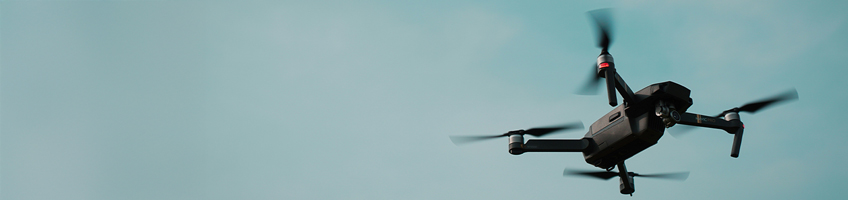
Drones offer a whole new way of capturing the world – offering angles, patterns and perspectives that were once only available to aerial photographers and filmmakers or professional drone pilots. But what was once a specialist field is now far more accessible, whether you're just starting out or shooting professionally. However, if you’re keen to get involved, there are some steps you need to take so that you fly safely and legally.
We're covering three key areas in this pre-flight checklist, guided by the official UK Civil Aviation Authority (CAA) and our trusted partners, Eagle Eye Innovations – a team of specialist drone pilots and trainers with professional credentials, qualifications, and experience in this field.
There are major Civil Aviation Authority (CAA) regulation changes - see our updated rules and regulations article

Operator ID
All drones sold by Wex with a camera, or drones over 100g, require an Operator ID. This is issued by the CAA and identifies you as the person responsible for the drone. It must be clearly displayed on your drone and renewed annually.
Register for your Operator ID here.
It is illegal to fly without the necessary IDs. Breaches can result in fines or imprisonment.

Flyer ID
If your drone weighs 100g or more, you’ll need a Flyer ID. This involves passing a short online theory test and is valid for five years.
Even for lighter drones, it’s still worth completing. It’s free and helps you understand the rules before flying.

Remote ID
Many newer drones broadcast identification and location data during flight, improving airspace safety and accountability.
If your drone supports Remote ID, ensure it is correctly configured before flying.
This is becoming increasingly standard across new models in 2026.

UK Class Mark
Class marks define how and where you can fly.
- A1, A2 or A3 airspace eligibility
- Remote ID requirements
- Operational limits
Always check your drone’s classification before flying.

Flight Restrictions
No-fly zones include:
- Airports and airfields
- Prisons
- Military sites
- Temporary restricted areas
Always check official airspace data before flying.

Heights and Distances
Drone Code guidance includes:
- Fly below 120m (400ft)
- Avoid flying over crowds
- Maintain safe distances from people and property
Rules apply to all pilots, with some exceptions depending on permissions.
Are you safe to fly?
Do you know how to fly your drone?
Before every flight, make sure you understand:
- How your drone behaves in different conditions
- Battery life and return-to-home settings
- Firmware and software updates
- Motor and propeller condition
Read the instructions and user manuals. Watch flight tutorials online. Download the latest software. Check critical components like battery level, motors and propellers before each flight. Be as diligent as you can be to ensure you know exactly how to fly your drone safely and efficiently.
Have you checked the weather?
You must check the weather before you fly. Most drones aren’t designed to fly in rain, and all will be affected by wind. Flying in conditions that exceed your drone’s manufacturer-stated limits can lead to poor performance, instability, or even prevent the drone from returning safely.
Avoid flying in:
- Strong winds
- Rain or snow
- Extreme cold can affect battery life
If the weather conditions exceed your manufacturer’s limits, don’t fly.
Can you see your drone at all times?
You must always keep your drone within your direct line of sight.
That means unaided vision - screens, zoom and goggles don’t count. Glasses are fine, but binoculars are not.
Never rely solely on a screen or FPV (first-person view) goggles when flying. If you’re flying FPV, you must have a trained observer maintaining visual contact with the drone at all times.
Do you understand your responsibility to safety?
Safety when flying is your top priority. Drones can cause serious damage or injury regardless of their size.
You must always prioritise:
- People on the ground
- Other aircraft
- Property and infrastructure
If something doesn’t feel safe, don’t fly.
Do you need any extra permissions or qualifications?
Depending on how and where you’re flying, you may need additional training or certification.
This could include:
- A2 Certificate of Competency (A2 CofC) for closer proximity flying
- Remote Pilot Competence (RPC) qualifications for more advanced operations (currently being introduced in phases)
Make sure you have a CAA A2 Qualification or new Recognised Assessment Entity (RAE) Pilot Competence (PC) Levels – RAE(PC).
Have you weighed your drone?
It’s important to check your drone’s actual take-off weight, including:
- Batteries
- Filters
- Propeller guards and accessories
Some smaller drones are sold as weighing under 100g or 250g, which can affect what IDs you need. However, once you add accessories such as propeller guards or ND filters, the total take-off weight can increase. It’s your responsibility as the pilot to check the actual weight before flying.
In the UK, drones weighing 100g or more require a Flyer ID, which involves passing a free online theory test from the Civil Aviation Authority (CAA). An Operator ID is required for drones with a camera from 100g upwards, or for any drone over 250g, and must be clearly displayed on the aircraft.
By law, you must:
- Register as an operator if your drone has a camera (from 100g upwards) or weighs 250g or more
- Hold a Flyer ID if your drone weighs 100g or more
- Follow the CAA’s Drone and Model Aircraft Code
For more information or to register, visit https://register-drones.caa.co.uk.
Are you flying commercially?
Are you flying for your job? Well, there’s no distinction between flying commercially or recreationally, meaning you don’t need additional approval for commercial piloting. However, all commercial drone flights require specific and valid business insurance for every flight. You can purchase this on a pay-as-you-fly basis or as an annual policy.
If you’re flying for business, you will typically need:
- Valid third-party liability insurance
- Additional operational planning depending on risk level
For businesses or freelancers, we recommend carefully reading the CAA’s CAP 722: Unmanned Aircraft System Operations in UK Airspace - Guidance.
Wrapping things up
This is just a quick pre-flight checklist for most casual pilots, but for the full breakdown of all rules, regulations, restrictions, and more, you’d best go to the CAA website.
We also work with Eagle Eye Innovations, our preferred qualification board. They are accredited as a Recognised Assessment Entity (RAE) by the CAA, allowing them to deliver training for the A2 Certificate of Competency (A2 CofC) and the General Visual Line of Sight Certificate (GVC).
And if you are yet to choose a drone, you can take a look at our guide to the best drones or take a look at all the drones we offer here.





Sign up for our newsletter today!
- Subscribe for exclusive discounts and special offers
- Receive our monthly content roundups
- Get the latest news and know-how from our experts